NPK is incomplete — the 17 nutrients your plant actually uses
NPK is incomplete — the 17 nutrients your plant actually uses
A vegetable grower in the Czech lowlands kept a notebook. He had been farming the same forty hectares for thirty years, and every season since 1998 he had written down what fertilizer went on, in what ratio, at what cost, and what the harvest came in at. By 2024 the notebook ran to nine volumes. He could quote the soil test from any season inside ten seconds.
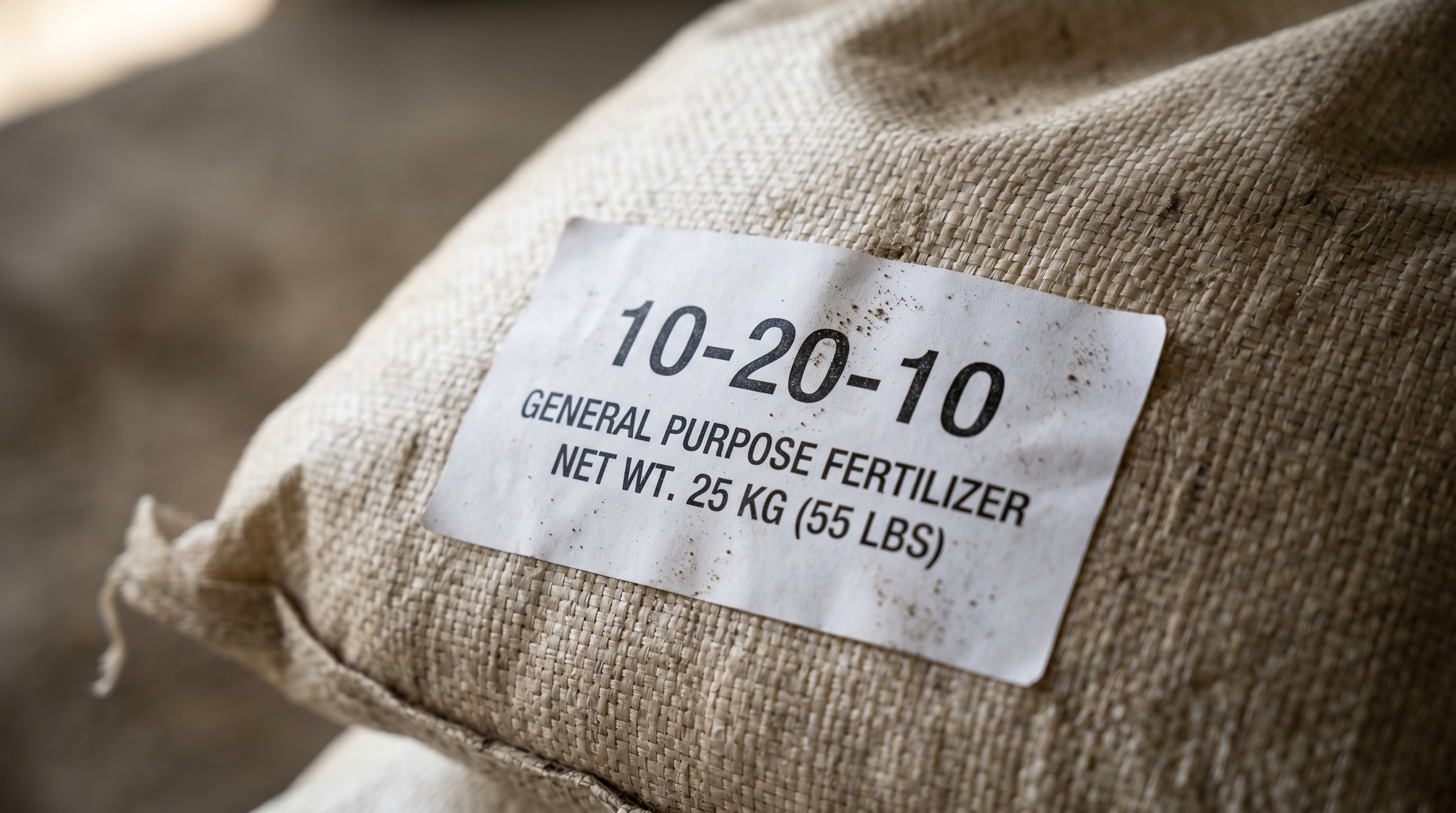
He had followed every recommendation. He had moved from a 16-16-16 to a 20-10-10 to a 28-7-14 as the local agronomist's program shifted. He had increased his nitrogen by twenty percent over the decade in line with breeding-program guidance. He had applied potassium chloride in the autumn and triple superphosphate in the spring like clockwork. The yield curve in his notebook climbed gently for the first fifteen years and then went flat. By the early 2020s it was drifting downward. The soil tests were "in range" on N, P, and K. The local agronomist could not point at any one thing.
When a regional university lab finally ran a full-panel analysis on his soils in 2024 — not just the macros, but the eight micronutrients and the soil organic matter — the picture became clear. His soil was depleted in zinc, low in boron, marginal on sulfur, and below threshold on soil organic carbon. The nitrogen, phosphorus, and potassium he had been buying for thirty years had been going onto a soil that was running out of everything else. The plants had nothing to pair the macros with.
That pattern is more common than the agri-shop wants to admit. NPK gets all the attention because the math of yield is most visible at those three nutrients. The truth is that a plant uses seventeen essential elements, NPK is three of them, and synthetic NPK alone is treating roughly one-fifth of the actual nutrient question.
The 17 essential plant nutrients
The full list, ordered by where the plant gets them from:
Three non-mineral, from air and water:
- Carbon (C) — the backbone of every organic molecule, drawn from atmospheric CO2 through photosynthesis.
- Hydrogen (H) — split from water and incorporated into sugars, proteins, and every other plant compound.
- Oxygen (O) — used in respiration and in every oxidative reaction the plant runs.
Six macro mineral, needed in larger amounts:
- Nitrogen (N) — protein synthesis, chlorophyll, the engine of vegetative growth.
- Phosphorus (P) — energy transfer (ATP), root development, flowering, seed formation.
- Potassium (K) — water regulation, stomatal control, enzyme activation, stress tolerance.
- Calcium (Ca) — cell wall structure, root tip development, signaling.
- Magnesium (Mg) — the central atom in every chlorophyll molecule. Without it the plant cannot photosynthesize.
- Sulfur (S) — sulfur-containing amino acids, enzyme cofactors, the protein quality of the harvested grain or fruit.
Eight micro mineral, needed in trace amounts but absolutely required:
- Iron (Fe) — chlorophyll synthesis, electron transport. Deficiency shows as interveinal yellowing on new growth.
- Manganese (Mn) — photosynthesis, nitrogen metabolism.
- Zinc (Zn) — auxin (growth hormone) synthesis, enzyme function. Globally the most common limiting micronutrient in cereal crops.
- Copper (Cu) — lignin formation, photosynthesis, reproductive development.
- Boron (B) — pollen viability, sugar transport, cell wall integrity. Deficiency shows up most visibly at flowering.
- Molybdenum (Mo) — required for nitrogen-fixing bacteria and for the plant's own conversion of nitrate to amino acids.
- Chlorine (Cl) — osmotic regulation, photosynthesis. Rarely deficient, occasionally toxic.
- Nickel (Ni) — urea metabolism, recently confirmed as essential.
That is the actual fertility checklist. The plant hits a yield ceiling at whichever element is most limiting, regardless of how much of the others you supply. The phenomenon has a name in agronomy — Liebig's Law of the Minimum — and it has been textbook material for a hundred and seventy years. It is also routinely ignored in fertilizer purchasing, because the bag in front of the farmer only mentions three of the seventeen.
What NPK alone misses
A typical synthetic NPK delivers, at most, three of the fourteen mineral nutrients the plant requires. Some products add sulfur or magnesium as a secondary blend. The micronutrient panel, in nearly every commodity NPK product, is either absent or present at a token level. The plant is expected to source the other eleven from somewhere else.

That somewhere else, in healthy soil, is the soil itself. The eight micronutrients are present in nearly every agricultural soil in the world, but they are bound up in mineral and organic forms that the plant cannot directly absorb. Releasing them into plant-available form is, in normal soil, the work of biology — bacteria and fungi mineralizing organic residue, mycorrhizal fungi solubilizing soil minerals and trading them to the root, the broader microbial community converting bound forms into mobile forms over the course of a season.
When that biology is intact, NPK is doing exactly what it claims. It is supplementing the macronutrient demand of a high-yielding crop, on top of a soil delivery system that handles everything else. The match works. The yield response is real and reproducible.
When the biology declines — and on synthetic-only programs, it does decline — the supplementation stops being supplementation. It becomes the entire delivery system. The plant gets the three macros that came out of the bag, and very little else, because the workforce that delivers the other eleven is no longer present at scale. The yield curve flattens, then drops, and the agronomist points at lime, gypsum, or a foliar micronutrient blend. None of which fixes the underlying loss of biological cycling capacity.
The Czech grower's notebook is a textbook example. Thirty years of N, P, K. Soil tests "in range" on the three letters that the test was designed to measure. Yield drift downward as zinc, boron, and sulfur availability quietly collapsed underneath. The bag he was buying was three of seventeen, and for the first fifteen years that had been enough because the soil was carrying the rest. By year twenty-five it no longer was.
Why "balanced" synthetic isn't actually balanced
The word "balanced" in fertilizer marketing means the ratio of N to P to K matches the crop's removal of those three elements at target yield. It is, by design, a three-element balance. It says nothing about the cofactor cascade that those three elements depend on inside the plant.
A plant needs sulfur and magnesium to convert applied nitrogen into protein. Without enough sulfur, additional nitrogen produces low-protein grain — bigger plants, lower-grade harvest. Without enough magnesium, additional nitrogen produces tissue that cannot photosynthesize the nitrogen into useful biomass. The yield response to extra N goes flat or even turns negative.
A plant needs zinc to use phosphorus efficiently — auxin synthesis is the bridge between root growth and phosphorus uptake. A field that is zinc-deficient does not respond to extra phosphorus the way the textbook predicts, because the limiting step is upstream. A plant needs boron to set seed and fruit, and a field that is boron-deficient produces vegetative biomass at the cost of reproductive yield, which is exactly the yield the farmer is selling.
The pattern is consistent across crops and regions. A "balanced" NPK applied to a soil that is depleted in cofactors produces yield that is below what the macronutrient math predicts. The grower then increases the rate of the macros, looking for the missing yield, and the cofactor deficiency widens because the plant is being asked to do more with the same broken supply chain. It is the most expensive way to find out that the soil was the problem.
A plant with all the nitrogen it can drink and no zinc still grows poorly. You don't fix it with more nitrogen.
How live microbiology delivers the full panel
The case for a live-microbial input, alongside or in place of synthetic NPK, is structural. The biology is the missing delivery system for eleven of the seventeen elements. Add the biology back and the cofactor cascade reconnects.

Magic Power is one example of how this plays out in practice. It is a live microbial extract derived from concentrated fish manure cycling through a closed-loop recirculating system, and it ships in 30-liter and 220-liter formats at a one-liter-per-thousand-liter dilution into existing irrigation water. In the bottle: nitrogen, phosphorus, and potassium plus the broader macro and micronutrient panel, plus billions of viable microbial cells, plus the enzymes and metabolites those microbes produce in the tank.
What that combination does, when it goes into the root zone, is two things at once. It supplements the macros directly, like a synthetic NPK does. And it inoculates the soil with the biological workforce that mineralizes the eleven elements already present in the soil's mineral fraction. The applied product is not the only nutrient delivery — the applied product is also the keystone that unlocks the rest of the soil. A single forty-foot container produces around two thousand liters of fertilizer per day, enough to cover hundreds of hectares on a regular fertigation schedule.
This is why on-farm trials with live-microbial inputs frequently report response patterns that the synthetic-NPK math alone would not predict. The yield response is broader than the macro contribution would explain. The micronutrient profile of the harvest improves alongside the yield, in target crops where pre and post measurements have been taken. The soil organic carbon climbs over multiple seasons. The cofactor cascade is reconnecting, and the plant finally has access to the full panel of seventeen.
What to look for on a fertilizer label
Three quick checks the next time you stand in front of a pallet at the agri-shop.
The first is the panel of nutrients listed. If the label only declares N, P, K, you are looking at a three-element input. If it also declares secondary macros (Ca, Mg, S) and the eight micros at quantified rates, you are looking at a more complete supplementation. If it declares those plus an organic matter percentage and a microbial CFU (colony-forming unit) count, you are looking at an input that is intended to feed the soil as well as the plant. Each step up that ladder is a different category of product.
The second is the feedstock and the production method. Synthetic NPK is mineral salt, manufactured from natural gas (for nitrogen) and mined ore (for phosphorus and potassium). A live-microbial input is biological in origin, and the source of that biology matters. Fish manure from a closed-loop system, traceable plant-based composts, and certified organic feedstocks are all defensible. Sewage-sludge biosolid feedstocks, as the 2024 reporting on PFAS in U.S. farms made clear, carry questions about industrial residues that the label does not surface. The supply-chain question is the same question, asked at the start of the chain instead of the end.
The third is the application math. A bag of granular synthetic that requires twenty kilograms per hectare every two weeks is a different operational cost than a 30-liter or 220-liter drum of liquid that goes through your existing fertigation line at one liter per thousand liters of water. Compare the AED-per-hectare-per-season number, not the bag price. The compounded difference over a season is usually larger than the price of the input itself.
A deeper look at the biology side — what the microbial workforce actually does and why it matters — sits at what's actually alive in your soil. The structural breakdown of where Magic Power comes from, what is in a single liter, and how it gets to a 30-liter format, is at fish manure to plant food. The full product range and pricing in the 30L and 220L formats is at the products.
If you would rather have the seventeen-element conversation against your specific soil test and your specific crop, apply for a container and we will run your numbers against ours. NPK was never the whole story. The label was just convenient.
Ready to put one on your land?
We respond within 24 hours and book a 30-minute discovery call. We figure out whether your land, water, and operation fit. If they do, we book the container.